
To Diana – for 14 Years of Yoga
July 22, 2010 by Aruna
Filed under Inspiration, Kids Yoga, Teacher Training
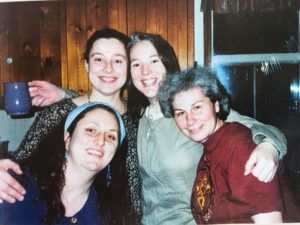
I had my youngest student ever In my last training – a 14 year old! She fit in wonderfully (I admit I am her biased aunt). Everyone in the course worked so well together and brought something unique to the course. Among the small group we had a Montessori teacher, gymnast, Pilates teacher, school teacher, yoga teacher, mothers, daughters, and a babysitter (Diana). Some playing many of these roles.
Now I don’t want to take all the credit for my awesome niece. Her parents, grandparents, teachers, friends probably helped too. But I realize Diana has always had yoga in her life and she’s always liked it. So here’s a little anecdotal evidence as a tribute to prove how Yoga has helped my 14 year old niece become a beautiful young woman and fledgling yoga teacher.
To Diana – for 14 Years of Yoga
- for the excitement of waiting for you to be born, with the use of a few relaxing yoga breathing techniques (some by your mom – and a lot by me in the hallway!) to help us be more relaxed to welcome this beautiful baby girl into our lives,
- for playing yoga games, listening to yoga music, and doing kids meditations on so many four hour drives to Ottawa,
- for having a yoga birthday party – because you love yoga (picture here)!
- for taking kids yoga classes at studios whenever you could find them because your “yoga aunt” lived too far away to teach you regularly,
- for posing for countless yoga pictures,
- for winning an award for your grade eight graduation and before your name was announced everyone knew it was you because they called you the girl who brings a smoothie to school every morning (something you got from a girls yoga book.
).
- for being the youngest person to take my kids yoga teacher training (14 years old). You took it, as you said,”because I like yoga and it may help me connect better with the kids I babysit.”
Thanks to everyone who was at the kids yoga teacher training in Pickering! It was a wonderful course and everyone had so much to offer. Including the 14 year old!
For anyone out there who wants to bring yoga to kids – I’ve seen how much it works, not only with Diana, but with so many of the beautiful kids I’ve taught over the years who are now becoming teenagers and adults! Even a little yoga on a walk or in your living room can plant the seeds for a yogic lifestyle and attitude.
Who else has seen the long-term benefits of yoga on children they know? Please share your stories in the comments.
Character Development: Perseverance
July 13, 2010 by Guest
Filed under Inspiration, Kids Yoga, Resources
In my city, Toronto (Canada), school teachers must guide kids on Character Development themes. Today’s theme is Perseverance and is the last in the Character Development series. Thank you to Donna Freeman, our guest blogger, for persevering to provide us with these Character Development and Yogic insights. Donna Freeman is the author of Once Upon a Pose: A Guide to Yoga Adventure Stories for Children and blogger at Yoga In My School.
A Successful Handstand Requires Perseverance
Living with Perseverance: A Core Principle of Yoga
by Donna Freeman
www.YogaInMySchool.com
Fall seven times, stand up eight.
– Japanese Proverb
Watch an infant learn to walk and you have the definition of perseverance: that dogged determination to succeed despite setbacks or obstacles. As we get older we often lose this sense of will power or resolve and begin to take the easy road thinking this will lead to happiness. Temporarily it may make life painless. However, in the long term we end up lacking energy, drive, motivation, enthusiasm, and purpose for living, making life truly miserable.
One of the core principles of The Yoga Sutras is abhyasa or practice: having an attitude of persistent effort to attain and maintain a state of stable tranquility. Children need to be taught the value of consistently choosing actions, speech and thoughts which lead to personal harmony.
The yoga niyama tapas (self-discipline) addresses living with perseverance. Tapas involves making the most of yourself, setting goals and not giving up easily. As we do this we free energy and live with greater vitality and intention. Tapas also involves curbing addictive behaviours be they shopping, video gaming, watching TV, eating when not hungry, overindulging or other destructive habits which consciously or unconsciously become part of our lives.
A kids yoga class is a wonderful place to teach these skills. As each individual regularly practices the poses, breathing exercises and relaxation techniques they will see an improvement in their health, attitude and self understanding.
Children who doubt themselves become confident and sure after attempting and succeeding at a challenging pose. Very active children can learn to calm their body and mind and find peace in a hectic, confusing world. Those with emotional turmoil are encouraged to listen to their heart to find freedom from strife.
Yoga simply asks that you show up, that you begin where you are today, and strive through consistent effort to find your best self. Ralph Waldo Emerson explains the process in this way:
Sow a thought and reap an action.
Sow an action and reap a habit.
Sow a habit and reap our character.
Sow our character and reap our destiny.
Perseverance is the core of yoga. Coming to the mat, exploring and expanding your abilities, determining in some small way to take these skills into the world, and doing it all again the next day.
Persevere and all will come. This is living yoga.
Character Development: 3 Steps to Integrity
June 9, 2010 by Guest
Filed under Inspiration, Kids Yoga, Resources
In my city, Toronto (Canada), school teachers must guide kids on Character Development themes. Today’s theme is Integrity. Remember integers in math? They are whole numbers. Integrity comes from the same root meaning whole or complete. Sounds perfect for yoga and today’s post by Yoga In My School specialist, Donna Freeman. She gives Three Steps to Integrity for some Yogic insight on the theme of Integrity.
Contemplation Nurtures Integrity in the Heart of a Child
Integrity – The Heart of Yoga
By Donna Freeman
www.Yogainmyschool.com
Integrity is a moral imperative which demonstrates itself as consistency of actions according to personal values and principles.
Three Steps to Developing Integrity
- Develop the ability to discern what is right and wrong
- Act in accordance with these fundamental values
- Stand behind individual actions in word and deed
These three steps define character.
Yoga helps to develop integrity by addressing the whole person: mental, physical, emotional, spiritual. A complete yoga practice allows introspection and self discovery. As individuals contemplate themselves, their lives, their joys and sorrows, their past, present and future, they develop self awareness and an internal consistency of character. They are able to determine their personal morality and motivation for actions.
Yoga also encourages honesty (satya). As we are honest with ourselves and others we become more trustworthy and genuine. We learn to speak and act from the heart lending authenticity to our daily lives. Both children and adults benefit from practicing satya as they can experience life as it truly is and experience the contentment of living truthfully.
Through practicing yoga we learn to respect others and live with an attitude of non-violence (ahimsa). The theme ‘do not harm’ is the keystone of yogic philosophy. Learning to live with peace, kindness and love toward self and others is vital to developing personal integrity and purity of life.
Truly developing integrity is the very essence of yoga. By spending time to know oneself, living honestly, and respecting self and others, we can determine our personal path and commit to living it whole heartedly. Yoga teaches us not only to talk the talk, but to walk the walk on and off the mat. This is integrity and integrity is the heart of yoga.
Character Development: Cooperation
April 26, 2010 by Guest
Filed under Inspiration, Resources
( In my city, Toronto (Canada), school teachers guide kids on themes of Character Development. I went to the Yoga In My School specialist, Donna Freeman, for some yogic insight about them. Thank you to Donna for this monthly series.)
Cooperation is Necessary in Partner Yoga
Cooperation: The Essence of Yoga
by Donna Freeman
www.YogaInMySchool.com
The essence of yoga is cooperation. Yoga, coming from the Sanskrit root yuj, means union, or joining, a coming together of the body, mind and breath to create greater harmony.
In a yoga class you may hear the instructor encourage participants to “not sacrifice the breath for the pose.” This means, to use all aspects of yourself in collaboration with one another in order to achieve your personal best, never allowing one part to suffer because you are too focused in another area.
We all have a tendency to do exactly that in our daily lives. It is all too easy to become un-balanced as we strive to meet goals, deadlines, and personal expectations, or the opposite, become complacent and unmotivated, even depressed, if there is a lack of symmetry and equilibrium in our bodies and lives.
A regular yoga practice will help to create greater communication between the body, mind and spirit, allowing each individual to access their intuition, their inner voice, their individuality. They become more genuine with themselves, and can then take that off the mat and into the world.
By discovering and respecting who you are, you also begin to appreciate and value others. Hopefully you will realize that the way you do things is not the only way in which they can be accomplished. There are many roads to perfection and each of us is engaged in our own personal journey. We can aid one another along the way. Helping, assisting, strengthening, lifting, providing the needed support to bring out the best in all.
While this is true in an individual yoga practice it is accentuated whenever partner and group poses are used.
Something incredible happens whenever two (or more) people work together doing yoga. From the basics of synchronized breathing to extreme acro-yoga postures, trust, connection and interdependence are prevalent.
When performing partner and group poses the participants must communicate with one another. They need to work together, to cooperate, to connect and feel supported while doing the same for others. Working at this level reinforces the need for one another as the poses cannot be complete without a partner.
Partner yoga increases feeling of acceptance as you relax into your partner’s support. You become more in touch with one another, physically, emotionally, and mentally. And there is always an element of playful fun and exploration as you discover new ways to work together.
The relationships and skills developed while doing partner and group poses can then be used in other tasks which require team work and interdependence.
Cooperation is an essential skill. It will lead to greater happiness, deeper, more meaningful relationships, and contentment. As we come to know ourselves and others through practicing yoga, we increase our ability to cooperate and are well on our way to achieving these aims.
Character Development: Honesty
March 14, 2010 by Guest
Filed under Inspiration, Resources
( In my city, Toronto (Canada), school teachers guide kids on themes of Character Development. I went to the Yoga In My School specialist, Donna Freeman, for some yogic insight bout them. Thank you to Donna for this monthly series.)

Honesty requires Reflection on Personal and Universal Truth
Personal and Universal Honesty
by Donna Freeman
www.YogaInMySchool.com
Teaching children to be honest is a primary goal of their upbringing. A common childhood tendency is to stretch the truth, exaggerate, or tell little lies that often lead to bigger ones. It is essential that each child learn what truth is so that they may develop confidence, trustworthiness and integrity, and become honourable, dependable adults.
Truth can be divided into two categories: personal truth and universal truth.
Personal Truth
Personal truth is an individual account or understanding of events. For children this most often becomes important when resolving conflict. “Tell me your version of what happened,” is a common request whenever adults intervene and need to understand the actions that have transpired to cause the hurt, anger, and tears.
Each individual experiences life differently. Even identical twins will gain different knowledge and life experience from the same life events because they are unique individuals with their own view of the world.
Empathy is developed as children begin to understanding that personal truth is relative. By seeing life through another’s viewpoint, children expand their comprehension of life and compassion for others.
Universal Truth
In yoga, truthfulness is called Satya: deep, foundational truth regarding the world, love and purpose in life. This is more than just telling the truth.
Knowing that within oneself are all the skills and abilities needed to successfully navigate life’s journey is a core concept in yoga. These skills may still be in embryo. However, each individual has it within themselves to be happy, successful and confident. As they learn to access their inner power and beauty, develop various skills and abilities, and trust themselves, they will reach their full potential.
Satya is also harmonizing the mind, heart and actions. When individuals live with moral discipline and align their actions with their beliefs they are living honestly. However, truth should never be used to hurt or destroy, and therefore needs to be tempered with kindness (ahimsa).
Parents, teachers and others who work with and care for children can assist them in learning to be honest with other individuals, society and themselves as they teach both personal and universal truth. These are not quick lessons, taught once and easily integrated. Instead continual review and application throughout the formative years is needed.
The result, however, is worth the effort. Children who have learned these lessons become responsible adults known for their positive outlook on life, kindness to self and others, and integrity. That’s a reality worth working towards.
The Word I DON’T Say In Kids Yoga, Do You?
February 23, 2010 by Aruna
Filed under Attitude, Inspiration
A couple years ago I wrote about how I accidentally swore in a Kids Yoga Class. In my defense, it wasn’t a swear word when I was a kid!
But this post about Yoga Music got me thinking about another word that has become TABOO in many kids yoga classes.
The word?
The word is: G O D
You see, if this word is in a song, I don’t play the song in my kids yoga classes.
This word just doesn’t work for me in Kids Yoga. There is a chance it will miss the mark with the many religions (and no religions) of the kids, teacher, and parents. Even in adult yoga classes I give an explanation of what I mean if I (rarely) say the GOD word.
God means something different for each person.
Once I had a complaint in a mostly Christian school, and the complaint was about NOT using the word GOD ! And I get the irony: Why wouldn’t Yoga and God go together?
The President of America uses it in his speeches. If the kids use it, I have no problems. But, I don’t use it.
Thank God for freedom of religion. Each person can decide for themselves – there is no right or wrong answer here.
Right now, kids yoga teachers from all over the world are making decisions about whether to say it or not. What have you decided to do? Do you use the “G” word?
(Please leave your comments below. Any comments that are dis-respectful or too “preachy” will be removed.)
Character Development: Fairness
February 21, 2010 by Guest
Filed under Inspiration, Resources
( In my city, Toronto (Canada), school teachers guide kids on themes of Character Development. I went to the Yoga In My School specialist, Donna Freeman, for some yogic insight bout them. Thank you to Donna for this monthly series.)

Olympians Play Fair and Develop Balance and Strength
Fairness and Balance in Yoga
by Donna Freeman
www.YogaInMySchool.com
Fairness refers to justice, equality and the absence of bias. Children seem to intrinsically know what is fair and what isn’t. There is even a series of advertisements which underline children’s innate ability to know when they are, and when they are not, being treated fairly.
Fairness with Ease and Strength
There are a number of ways this principle relates to yoga. The most prevalent is the ideals of Sukha (easy, pleasant, gentle) and Sthira (solid, durable, strong). The goal when practicing yoga is to have equal amounts of these two opposing philosophies present at all times.
Yogis are always looking to balance the effort with the ease, the soft and the hard. To treat both aspects of the poses with fairness in order to allow the body and mind to expand to its full potential. If Sukha is too much of a focus, the consequence is laziness and lack of will power. If Sthira is stressed, then injury or burnout may result. Neither extreme is healthy, but a balance of the two permits beautiful expression and growth.
Yoga Poses to Teach Fairness
In addition, balance poses teach much about fairness. Poses such as tree pose, dancer pose and eagle pose help to refine the sense of equality. Performing these poses always seems easier on one side, but both sides need the same opportunity to work the pose. The lessons, however, are more than physical. Children learn to focus and concentrate, training their minds as well as their bodies.
Finally fairness is underscored with Satya (honesty). Satya is the virtue of being true to and honest with yourself and those you encounter. This includes in speech and action. The ideal of fairness is completely redundant without honesty. Being able to see the world through realistic lenses helps to overcome selfishness and encourages compassion.
Teaching honesty to children is an ongoing endeavor.
Personal integrity is an elusive but essential aspect of society’s morals. Practising compass pose (Bikram half moon) with an accompanying discussion on how compasses help guide individuals through the storms of life provides a kinaesthetic reinforcement of these ideals.
The principles of fairness and equality are threaded throughout yoga. Children know the difference between right and wrong, justice and injustice. Allow yoga to help develop this knowledge through balance and honesty.
Character Development: Teamwork
January 25, 2010 by Guest
Filed under Inspiration, Resources
( In my city, Toronto (Canada), school teachers have been given a monthly theme to teach in the classroom. The Toronto District School Board calls it Character Development. I went to the Yoga In My School specialist – Donna Freeman for some insight into the monthly themes. Thanks to Donna for this monthly series on Character Development.)
Teamwork the Ultimate Aim of Yoga
By Donna Freeman
www.Yogainmyschool.com
The word Yoga comes from the Sanskrit word yuj meaning ‘yoke’ or ‘union.’ The very foundation of yoga is a joining, or bringing together, of the body, breath, and mind. Flexibility, strength, and good health are all wonderful benefits of this practise, but its ultimate aim is to create more togetherness, personally and universally.
One key way yoga achieves this union is through breathing techniques. Training the body to breathe correctly requires concentration and clarity of thought. As various breathing exercises are learned and mastered, yogis become more in tune with their body and can use their breath to relax the nervous system, improve the body’s use of oxygen and achieve a sense of calm. This turning inward allows children to connect with themselves on a deeper level. Once kids have a solid sense of self they are prepared to interact with others in a positive, giving manner from a foundation of cooperation and trust.
Another way yoga promotes teamwork is through meditation. Meditation means awareness and involves reducing all the scattered activity of the mind to one. Often when meditating, mantras (sounds and words) are used to help focus the mind. Many mantras focus the intention on world peace, happiness and union. An example of this is Loka Samasta Sukhino Bhavantu. Mantras assist in creating greater unity one individual at a time and promote setting aside personal agendas for the greater good.
A third way yoga teaches teamwork is with partner poses. Partner poses develop trust, intimacy and connections. These can be especially fun with children as they interact with others in a social and physical manner. Most yoga poses can be developed into partner poses and can help all individuals experience healing touch, playfulness and the power that comes from working together toward a common goal. The most extreme form of partner yoga is Acro Yoga where one partner is the base while the other flies above doing various yoga acrobatics. A sense of togetherness and connection result whenever partner poses are practiced.
Breathing exercises, meditation and partner poses are but three means by which yoga develops teamwork. When doing yoga, the principle aim is to join your body, breath and mind to produce positive change physically, emotionally and spiritually. This sense of union will benefit the individual as well as the group.
Teamwork the Ultimate Aim of Yoga
Finding Meaning in Holiday Gifts
December 15, 2009 by Guest
Filed under Inspiration
By Amy Brevan
www.thepranamama.com

Lucy Van Pelt: I know how you feel about all this Christmas business, getting depressed and all that. It happens to me every year. I never get what I really want. I always get a lot of stupid toys or a bicycle or clothes or something like that.
Charlie Brown: What is it you want?
Lucy Van Pelt: Real estate.
As someone with little patience for television ads, junk mail, online pop-ups and telemarketers, I get particularly irritated by the commercial bombardment that occurs as the winter holidays approach. They start earlier every year, even before Halloween, with their noisy television commercials and flashy online advertisements. Nothing turns me off faster than big corporations with huge marketing budgets hawking merchandise this time of year.
A Charlie Brown Christmas(TM) first taught me years ago, Christmas is not about giving or receiving the coolest new gadget or competing with other stressed-out parents for the hottest toy on the market. But the marketing geniuses behind the world’s biggest businesses must have missed this 1965 children’s classic. The holidays are big business, and as so many families are struggling financially in 2009, they’re working overtime to make sure we see and hear all they have to offer.
Most people enjoy the genuine tradition of giving gifts at the holidays. There is nothing more satisfying than finding that perfect gift to show your love and gratitude for another human being. The challenge is to remember that the smallest gifts - a child’s artwork, kind words on a written notecard or a homemade meal – sometimes mean more than those items in the glossy Sunday newspaper inserts.
Like millions of others, this year my holiday budget is considerably smaller than in the past. I plan to make meaningful gifts at home and purchase others from artisans in my community. I also chose to shop at an independent toy store nearby for the children in my life. Although I may have saved money at a big box store, I bought fewer items, but higher quality toys, while supporting my own local economy.
Even though my intention was to buy fewer gifts for my kids this year, I still struggle to end the shopping habit once it has started. My nearly five-year-old is absorbing the commercialism like a sponge, often pointing at classmates’ sparkly shoes or beautiful dolls and demanding I add these things to her wish list for Santa. I try to keep reminding her that Santa cannot bring everything on the list – a good lesson for myself as well.
Santosha, an ancient Sanskrit word meaning contentment, is found in Patanjali’s Yoga Sutra 2.42: “contentment produces happiness . . .”
Remembering to be content with what we have, for ourselves and others, rather than desiring what we do not, is something to keep in our hearts throughout the season.
Amy Bevan is a journalist, blogger and freelance non-fiction writer based in Southern Maine. As a reporter, she covers town news for The Portsmouth Herald, and is the creator of The PranaMama, an online resource for mothers focusing on wellness topics, such as yoga, nutrition and fitness. Her work has also appeared on A Balancing Act, a webzine for writers, and Yoga In My School, a children’s yoga business and blog. Beginning this month, Amy will be the head writer for the The Kids Yoga Resource. For more information, visit www.amybevan.weebly.com.
Finding Meaning in Holiday Gifts
By Amy Brevan
Lucy Van Pelt: I know how you feel about all this Christmas business, getting depressed and all that. It happens to me every year. I never get what I really want. I always get a lot of stupid toys or a bicycle or clothes or something like that.
Charlie Brown: What is it you want?
Lucy Van Pelt: Real estate.
As someone with little patience for television ads, junk mail, online pop-ups and telemarketers, I get particularly irritated by the commercial bombardment that occurs as the winter holidays approach. They start earlier every year, even before Halloween, with their noisy television commercials and flashy online advertisements. Nothing turns me off faster than big corporations with huge marketing budgets hawking merchandise this time of year.
As A Charlie Brown Christmas first taught me years ago, Christmas is not about giving or receiving the coolest new gadget or competing with other stressed-out parents for the hottest toy on the market. But the marketing geniuses behind the world’s biggest businesses must have missed this 1965 children’s classic. The holidays are big business, and as so many families are struggling financially in 2009, they’re working overtime to make sure we see and hear all they have to offer.
Most people enjoy the genuine tradition of giving gifts at the holidays. There is nothing more satisfying than finding that perfect gift to show your love and gratitude for another human being. The challenge is to remember that the smallest gifts - a child’s artwork, kind words on a written notecard or a homemade meal – sometimes mean more than those items in the glossy Sunday newspaper inserts.
Like millions of others, this year my holiday budget is considerably smaller than in the past. I plan to make meaningful gifts at home and purchase others from artisans in my community. I also chose to shop at an independent toy store nearby for the children in my life. Although I may have saved money at a big box store, I bought fewer items, but higher quality toys, while supporting my own local economy.
Even though my intention was to buy fewer gifts for my kids this year, I still struggle to end the shopping habit once it has started. My nearly five-year-old is absorbing the commercialism like a sponge, often pointing at classmates’ sparkly shoes or beautiful dolls and demanding I add these things to her wish list for Santa. I try to keep reminding her that Santa cannot bring everything on the list – a good lesson for myself as well.
Santosha, an ancient Sanskrit word meaning contentment, is found in Patanjali’s Yoga Sutra 2.42: “contentment produces happiness . . .” Remembering to be content with what we have, for ourselves and others, rather than desiring what we do not, is something to keep in our hearts throughout the season.
Character Development: Kindness and Caring
December 10, 2009 by Guest
Filed under Inspiration, Resources
( In my city, Toronto (Canada), school teachers have been given a monthly theme to teach in the classroom. The Toronto District School Board calls it Character Development. I went to the Yoga In My School specialist – Donna Freeman for some insight into the monthly themes. Thanks to Donna for this monthly series on Character Development.)

Kids Baking for Friends
December Character Development Theme: Kindness and Caring
Kindness and Caring the Foundation of Yogic Philosophy
By Donna Freeman
www.yogainmyschool.com
In our home we have one rule. Yes, remarkably, one principle rule to govern all our actions and interactions. It is “Be Kind.” When that one rule is followed life is in harmony. We respect one another. We are responsible for our things and our time. We help without whining. We use kind words. We express gratitude. We show love through small, thoughtful actions. Truly kindness is the key to a happy home and a fulfilling life.
Ahimsa—non violence—is the yogic philosophy which teaches kindness and caring. It is in essence living with an attitude of not wanting to harm anyone or anything, including yourself, in work, thought or action. From this basic core value all other yamas and niyamas are erected. Ahimsa is the foundation upon which basic values are built.
The first step to living with ahimsa is becoming aware of our habits. Only through awareness do we realise exactly how we are living. Once we are aware we are able to improve upon our weakness and build upon our strengths.
Throughout life there will be times which naturally call for greater ahimsa. Tragedies bring out our compassion. Life’s curve balls will teach us kindness as we recognize the help and thoughtfulness shown to us by others during our times of need. Involving children in acts of service and charity is a wonderful way to instill in them a sense of concern and caring for others.
Christmas is an Opportunity to Look Outside of Selfishness
Christmas, with its season of giving and goodwill toward all men, is often an opportunity to look outside of selfish wants and desires and serve others. Volunteering at a soup kitchen, giving generously to a charity, filling boxes at the local food bank, and many other opportunities of service to our fellow man are ways to live with ahimsa: to embody kindness and caring.
Often the most difficult way of incorporating this principle into our life is though regarding ourselves through ahimsa. Negative self-talk, always striving for perfection, and personal expectations of our behaviour and accomplishments need to be tempered through a feeling of kindness to self. Be gentle with yourself. Develop your softer side. Do something you love. Treat your body and mind with care.
Take the time today to live with ahimsa.
- Begin by becoming aware of your interactions. Do you approach life from a foundation of non-violence?
- Next decide to interact with people positively: to express compassion in thoughts and actions.
- Finally remember that you are worth the same kindness and care you express to others.
Remember the one rule “Be Kind” and enjoy a joyful and rewarding life.
www.Yogainmyschool.com