How Yoga Can Help if Your Kids Drop Out of School and Join the Circus – A Yoga Game for Worry
September 2, 2010 by Aruna Kathy Humphrys
Filed under Attitude, Kids Yoga, Yoga Games
Worry is imagining all the things that CAN go wrong. Its like creating a personalized haunted house in your head. Worry is illusions, smoke and mirrors, things that haven’t actually happened for real. Like our kids flunking out in school and having to join the circus!
Back to school time is a popular time for worrying. We help ourselves and our kids by looking worry straight in the eye and seeing it for what it really is – a trick of the mind. The Yogis say the mind is like a wild stallion that must be reigned in. We’ve got to tame that stallion so that it can preform the tricks we want, not put us in danger!
So if you or your kids are worrying this week about back to school stuff, take off the pressure with a little fun by asking, “How bad would it really be?”
The “How bad would it really be?” game helps us learn to laugh at the tricks of the mind and put the mind in it’s rightful place. For instance, if school does go horribly wrong a yogi could get many jobs that a regular education does not prepare them for.
How bad would it really be? If school doesn’t work out, kids can always join the circus! They could do a balancing act on the 80 ft. poles.
How bad would it really be? Since there’s so may animal yoga poses don’t forget the petting zoo fast track.
How bad would it really be? A child who likes meditation may choose Sand Sculpture for their livelihood.
How bad would it really be? Bendy Em seems to be fitting in fine with her yoga background:
How bad would it really be? Look what a calm and steady state of mind can help you with:
How bad would it really be? If none of these work out, this shack may be the dream job of a lot of children:
By facing worry with a light heart we can better transform it and think about what we like instead of what we don’t like. When worry takes the reigns – try playing this game to take the reigns back. Soon you’ll find there is really not that much to worry about after all!
Tame that stallion and go for a pleasure ride.
What games do you play that help adults and kids with worry?
More News
The Fall Schedule is here! Don’t miss out on the Young Yoga Masters Kids Yoga Teacher Training course. Its like no other! Pass on the wisdom of yoga to the future generations! Too see the upcoming courses click here. To bring the Young Yoga Masters training to your area contact: Aruna@YoungYogaMasters.com. Registration is now open. I’d love to meet you in-person for this inspiring and practical training.
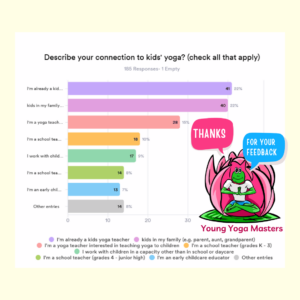
Contest: Thanks to everyone who filled out the Survey and entered to win the prize Romancing the Stove, A Practical Guide to a Lifelong Celebration of Eating for Health by Samahria Ramsen. I will be contacting the winner from Alfred, ME, USA! Everyone’s input was so valuable to guide the direction of Young Yoga Masters for the coming months.
How to Start a Kids Yoga Program at a School
August 24, 2010 by Aruna Kathy Humphrys
Filed under Business Development, Kids Yoga
Back to school looms closer and closer. This is good news for kids yoga teachers interested in finding new classes. Here are some pointers, from experience, on how to get a kids yoga program into a school.
How Well Do You Know Your School System?
The first thing to do is to get to know your school system and curriculum and this is where we give thanks for the internet. Search your city name and “education,” “Ministry,” or “Board” until you find the official government website.
You’re about to learn a new language – the one used by your school. Write your proposal using the language from their curriculum NOT yoga language. You won’t find a single requirement for chakra opening in a school curriculum. Each school system has their own vernacular, learn it and use it as much as possible in your proposal.
Physical Education Curriculum:
What is it called and what are the curriculum requirements. In my area (Ontario, Canada) the Health and Physical Education program is divided into “Strands” (see what I mean about language!).
There are three strands in Grades 1 – 8, and four in high school. When you’ve got a good idea of how your yoga program enhances the curriculum, then who do you talk to? Usually its the Physical Education Department Head.
Class Sizes – How Many Can You Teach?
Also look on the website for the typical class size. This will help you determine how many classes you can teach at a time. If you put two classes together, one teacher can stay for yoga while the other gets to catch up on other work. It also cuts down on expenses. My area tries for 23 students or fewer in primary classes. Put your class size limits in your proposal as well as how many classes you can teach in a row.
Professional Development for Teachers:
Can you sweeten the package by adding a free class to teachers at the staff meeting if they book you for a minimum number of classes? Talk to the department head, VP or Principal of the school about how you can save them money and time.
Other Types of Education in the Curriculum:
Examples: Stress Management, Character Development, Healthy Schools initiative, Michelle Obama introduced the Let’s Move program. Tap into these with kids yoga. Please share any grants you know of in the comments!
Lunch-Time or After School Classes:
These classes usually involve charging each student enrolled. If you can get high numbers you can keep the cost down and still make a living. Approach the Parent Board at the school as a way in.
Daycare Classes:
Some regions offer daycare programs for after school. Approach the daycare manager about doing a weekly class in each room.
Make someone’s life easier.
Who ever you approach, make their life easier. No one wants a program that means more work! Deliver a great kids class. If you can’t, get the yoga and kids yoga training to do it. You’ve got to know how to manage and run a kids yoga class or you’re program won’t last.
Become a Reliable Resource for the School
Most of the places I teach kids yoga, I’ve gone to for over 7 years, some schools for 10 years! It’s better to return to a school rather then to keep finding new classes. If you make the whole program stress-free, they will want you back and this is good for everybody.
The Time is Now: The Week Before School Starts
All this information is very timely! There is a window right before school starts where the teachers are back to work but the students aren’t. In Ontario the teachers start back on Sept. 1 but the children don’t come back till Sept. 7. Find the window and go in with a proposal. Or wait a month till the back to school rush is over. You may be able to help the teachers meet their requirements.
All the best to everyone out there working to increase kids health and happiness. Please feel free to add any insights or links you have to the comments and let’s get more kids doing yoga!
Aruna Kathy Humphrys
www.YoungYogaMasters.com
More News
The Fall Schedule is here! Don’t miss out on the Young Yoga Masters Kids Yoga Teacher Training course. Its like no other! Pass on the wisdom of yoga to the future generations! Too see the upcoming courses click here. To bring the Young Yoga Masters training to your area contact: Aruna@YoungYogaMasters.com. Registration is now open. I’d love to meet you in-person for this inspiring and practical training.
Contest: Win Romancing the Stove, A Practical Guide to a Lifelong Celebration of Eating for Health by Samahria Ramsen. To enter fill out the short survey here. Contest closes: August 31, 2010. Thanks to everyone who has already filled out the survey. Your input will guide the direction of Young Yoga Masters.
Survey Contest – Win with Your Opinion of Kids Yoga
August 17, 2010 by Aruna Kathy Humphrys
Filed under Kids Yoga
Create your free online surveys with SurveyMonkey, the world’s leading questionnaire tool.
Scientific Studies that Support Kids Yoga
These 3 Studies Show how Yoga Improves Stress Management, Spatial Memory, and Body Control in Children
by Alex Bonari, guest blogger
www.collegescholarships.org
Yoga for children can seem unnecessary. After all, they’re young, so aren’t they already limber? They shouldn’t have any problems with stretching, their lives aren’t as stressful as those of adults, and it would probably be difficult to get children interested in a yoga routine.
As it turns out, scientific research has proven that logic wrong. No matter how healthy a child’s body may be, it can always benefit from yoga practice. Children’s lives are also becoming more stressful and they seem to welcome the novelty and relaxation that accompany yoga instruction. The following three articles discuss the results of scientific research that has documented the positive effects of yoga on children.
Enhances Stress Management and Relaxation (click here to link to study)
In this study, 48 fifth-graders who showed abnormal test anxiety were divided into a control group of 27 and an experimental group of 21. The experimental group received 60 minutes of yoga instruction on 15 different occasions, while the control group received none. The subjects were evaluated before the study, immediately after the yogic training, and 3 months after the conclusion of the study.
The students who received yoga instruction had an increased emotional balance in the long term and showed reductions in fear, feelings of helplessness, and aggression. This study also observed that students who received yoga instruction transferred what they had learned to situations outside of school to improve their well-being and to control negative feelings.
Improves Spatial Memory (click here to link to study)
This study compared before-and-after verbal and spatial test results for three groups of children: those attending a fine arts camp, those attending a yoga camp, and a control group.
The only group that showed any difference between its before-and-after test results was the yoga group, which demonstrated a 43% rate of improvement in the spatial category. This suggests that yoga practice, which included physical postures, yoga breathing, meditation, and guided relaxation in the study, improved the performance of children’s right-hemisphere brain activity.
Increases Static Motor Performance (click here to link to study)
In this study, children from ages 9 to 13 were divided into two groups. One group received yogic training (physical postures, voluntary regulation of breathing, maintenance of silence, visual focusing exercises, and games to improve the attention span and memory) while the other did not. Over a ten-day period, the children in each group were tested morning and night to observe their steadiness.
The yoga group showed a 17% increase in steadiness at the end of the period, while the control group showed no improvement. The study concludes that yogic instruction improves children’s ability to control their minds and bodies.
Guest Blogger Bio: Alexis Bonari is a freelance writer and blog junkie. She often can be found blogging about general education issues as well as information on college scholarships. In her spare time she enjoys square-foot gardening, swimming, and avoiding her laptop.
Kids Yoga Teacher Training
The Fall Schedule is here! Don’t miss out on these training courses or you’ll be missing an uplifting weekend that will nourish not only yourself, but all the children in your life. Pass on the wisdom of yoga to the future generations! Too see the upcoming courses in Ontario Canada click here. To bring the Young Yoga Masters training to your area contact: Aruna@YoungYogaMasters.com. Registration is now open. I’d love to meet you there for in-person training.
Spatial Memory
This study compared before-and-after verbal and spatial test results for three groups of children: those attending a fine arts camp, those attending a yoga camp, and a control group. The only group that showed any difference between its before-and-after test results was the yoga group, which demonstrated a 43% rate of improvement in the spatial category. This suggests that yoga practice, which included physical postures, yoga breathing, meditation, and guided relaxation in the study, improved the performance of children’s right-hemisphere brain activity.
3 Hard-to-Teach Kids Yoga Poses
August 4, 2010 by Aruna Kathy Humphrys
Filed under Kids Yoga, Lesson Plans, Teacher Training
This post is a free sneak peak at the Kids Yoga Teacher Training I offer at Young Yoga Masters. You can get many more tools like this by joining me for one of the upcoming fall courses. I’d love to see you there. Click here for full details.
An important part of the kids yoga teacher training is finding out what doesn’t work in kid’s yoga BEFORE you are with the kids. You’ve got to know age-appropriate poses, how to teach them, and how to time your classes. Too many hard-to-teach poses can lead to frustrated, injured, or tuned out kids.
“Hard” means “Time Consuming”
For instance, these three poses can be hard to teach to kids. Perhaps “hard” isn’t the best word, lengthy-to-teach may describe it better. It doesn’t mean I don’t teach them. It also doesn’t mean kids don’t like them. In fact I do teach them and kids do like them – a lot! Certain poses just require more time and energy.
I DO NOT recommend introducing all three of these poses in one class. Here’s why:
- Cat/Cow Pose: usually ends up being Downward Dog/Cow pose. Hard-to-teach because no matter what you say, about 25% of the class doesn’t get the part about keeping your knees on the floor. By the time you’ve helped the 15th child figure out the pose, the first children have been doing the pose for a long time or have tuned out.
- Wheel: The kids who can do wheel pose love it – and ask for it! So if kids ask for it, don’t give in right away. Often 50% of older kids can’t do it. Wheel pose takes a heap of arm and abdominal strength plus flexibility. This can’t be taught in one class. If you start off with wheel, you’ll have half the class watching on in awe, but unable to do it. Then they feel inadequate doing an alternate pose. Most pre-school kids can’t do wheel at all! If kids ask for wheel, start off teaching the poses that build up to wheel, like table, bow, and camel pose. Then offer up wheel to try at the end of class for a short time – the kid’s who can’t do wheel, after all those other poses, will be too tired to care.
- Donkey Kicks: kid’s love donkey kicks, but you’ve got to warn them about NOT FLIPPING OVER! Sometimes kids get so excited they really go for it. And then there’s the problem of KIDS GETTING KICKED. With Donkey Kicks the teacher must be up and walking around – to serve and protect.
Sometimes when we’ve been doing yoga for a while we forget which poses are beginner, intermediate, and advanced. Introduce yoga to kids with beginner poses, then sprinkle in the hard-to-teach poses. Those poses will feel much more satisfying when there aren’t too many.
Do you have any tricks for teaching these hard-to-teach poses?
Do you find any poses hard-to-teach?
For When You Have a Few Extra Minutes at the End of a Kids Yoga Class
July 29, 2010 by Aruna Kathy Humphrys
Filed under Kids Yoga, Meditation with Children, Yoga Games, Yoga Songs
Have you ever been teaching kids yoga only to find yourself with 7 or 8 minutes at the end of the class, not sure what to do? It’s too little time for a big activity but too much time to finish early.
It’s those few minutes after you’ve already done the yoga, relaxation, a meditation, and a game.
It’s in a setting, like a school or daycare, where kids get story time and drawing – so you don’t want to repeat.
I’m referring to the places where you charge them for a full hour, which usually flies by, but on these days, the last few minutes seem like eternity.
This happened to me this week in a summer day care class with a group of 3-4 year old kids. The class was small (8 kids) so all the yoga and games went by fast (compared to when there are 15 kids). Yoga was right after nap time (3-4 pm), so the kids didn’t need a long relaxation. Plus an hour with this age group is already on the long side of the class length.
Here are three things I go-to when I want to fill those last few minutes on days like these:
- Reflection Time: Ask the children to list all the poses we did in class. Which were difficult to do? Which were easy? Which was the most fun?
- Dancing: Free form dance or a Freeze Dance (like Move and Freeze
) gives the kids some unstructured movement. Play many different styles and rhythms of music. End with a slow song and then a minute of sitting quietly to leave the class in a calm state.
- A Goodbye Song: Have you ever heard of Lawrence Welk? He had a Goodnight song for the end of the show. I also have another song that uses kids names that involves a bathtub, a giraffe, and a plug.Make a slight adjustment to the words, but use the same tune and you have a sweet song to finish class (bubbles optional):
Lawrence Welk’s Good-Bye Song
Here’s one version I’ve used:
Good-bye Maya
So Long Maya (or change the name each time if you have a lot of kids)
Good-Bye Everyone
It’s time for me to go.
Hope you had a happy time, happy time, happy time.
Hope you had a happy time, I had a happy time too.
(repeat with another name)
When you have a few extra minutes at the end of a class do you end early or fill it? What do you do in those extra few minutes?
To Diana – for 14 Years of Yoga
July 22, 2010 by Aruna
Filed under Inspiration, Kids Yoga, Teacher Training
I had my youngest student ever In my last training – a 14 year old! She fit in wonderfully (I admit I am her biased aunt). Everyone in the course worked so well together and brought something unique to the course. Among the small group we had a Montessori teacher, gymnast, Pilates teacher, school teacher, yoga teacher, mothers, daughters, and a babysitter (Diana). Some playing many of these roles.
Now I don’t want to take all the credit for my awesome niece. Her parents, grandparents, teachers, friends probably helped too. But I realize Diana has always had yoga in her life and she’s always liked it. So here’s a little anecdotal evidence as a tribute to prove how Yoga has helped my 14 year old niece become a beautiful young woman and fledgling yoga teacher.
To Diana – for 14 Years of Yoga
- for the excitement of waiting for you to be born, with the use of a few relaxing yoga breathing techniques (some by your mom – and a lot by me in the hallway!) to help us be more relaxed to welcome this beautiful baby girl into our lives,
- for playing yoga games, listening to yoga music, and doing kids meditations on so many four hour drives to Ottawa,
- for having a yoga birthday party – because you love yoga (picture here)!
- for taking kids yoga classes at studios whenever you could find them because your “yoga aunt” lived too far away to teach you regularly,
- for posing for countless yoga pictures,
- for winning an award for your grade eight graduation and before your name was announced everyone knew it was you because they called you the girl who brings a smoothie to school every morning (something you got from a girls yoga book.
).
- for being the youngest person to take my kids yoga teacher training (14 years old). You took it, as you said,”because I like yoga and it may help me connect better with the kids I babysit.”
Thanks to everyone who was at the kids yoga teacher training in Pickering! It was a wonderful course and everyone had so much to offer. Including the 14 year old!
For anyone out there who wants to bring yoga to kids – I’ve seen how much it works, not only with Diana, but with so many of the beautiful kids I’ve taught over the years who are now becoming teenagers and adults! Even a little yoga on a walk or in your living room can plant the seeds for a yogic lifestyle and attitude.
Who else has seen the long-term benefits of yoga on children they know? Please share your stories in the comments.
Character Development: Perseverance
July 13, 2010 by Guest
Filed under Inspiration, Kids Yoga, Resources
In my city, Toronto (Canada), school teachers must guide kids on Character Development themes. Today’s theme is Perseverance and is the last in the Character Development series. Thank you to Donna Freeman, our guest blogger, for persevering to provide us with these Character Development and Yogic insights. Donna Freeman is the author of Once Upon a Pose: A Guide to Yoga Adventure Stories for Children and blogger at Yoga In My School.
A Successful Handstand Requires Perseverance
Living with Perseverance: A Core Principle of Yoga
by Donna Freeman
www.YogaInMySchool.com
Fall seven times, stand up eight.
– Japanese Proverb
Watch an infant learn to walk and you have the definition of perseverance: that dogged determination to succeed despite setbacks or obstacles. As we get older we often lose this sense of will power or resolve and begin to take the easy road thinking this will lead to happiness. Temporarily it may make life painless. However, in the long term we end up lacking energy, drive, motivation, enthusiasm, and purpose for living, making life truly miserable.
One of the core principles of The Yoga Sutras is abhyasa or practice: having an attitude of persistent effort to attain and maintain a state of stable tranquility. Children need to be taught the value of consistently choosing actions, speech and thoughts which lead to personal harmony.
The yoga niyama tapas (self-discipline) addresses living with perseverance. Tapas involves making the most of yourself, setting goals and not giving up easily. As we do this we free energy and live with greater vitality and intention. Tapas also involves curbing addictive behaviours be they shopping, video gaming, watching TV, eating when not hungry, overindulging or other destructive habits which consciously or unconsciously become part of our lives.
A kids yoga class is a wonderful place to teach these skills. As each individual regularly practices the poses, breathing exercises and relaxation techniques they will see an improvement in their health, attitude and self understanding.
Children who doubt themselves become confident and sure after attempting and succeeding at a challenging pose. Very active children can learn to calm their body and mind and find peace in a hectic, confusing world. Those with emotional turmoil are encouraged to listen to their heart to find freedom from strife.
Yoga simply asks that you show up, that you begin where you are today, and strive through consistent effort to find your best self. Ralph Waldo Emerson explains the process in this way:
Sow a thought and reap an action.
Sow an action and reap a habit.
Sow a habit and reap our character.
Sow our character and reap our destiny.
Perseverance is the core of yoga. Coming to the mat, exploring and expanding your abilities, determining in some small way to take these skills into the world, and doing it all again the next day.
Persevere and all will come. This is living yoga.
5 Potential Life Saving Summer Safety Tips That Should Not be Ignored
July 8, 2010 by Aruna
Filed under Kids Yoga, Teacher Training
Yesterday I was saddened by some tragic news at the daycare where I teach yoga. They were grieving three recent deaths in the community. These occurred in two separate incidents outside of the daycare – but all involved drowning.
A three year old boy drowned at home when he wandered off and fell in the pool. He was a student at the daycare. The shock and sadness still lingers in his classroom.
The other involved the uncle and cousin of a school age student. They drowned in a lake while playing in the water. The uncle tried to save his son who started drowning when the lake dropped off and suddenly got deep.
In the last week there have been ten drowning deaths in Ontario, of these seven were children or teens. Regardless of where you are – education is the key to safety. Today, to honor our dear friends at the daycare we are going to take time out for some safety reminders.
5 Potential Life Saving Summer Safety Tips That Should Not be Ignored
- Water Safety: It only takes seconds to minutes to drown in water. If children can’t swim they should wear life jackets in any water that can get deep. Kids who are going to around water regularly should take swimming lessons so they practice how to breath and move in the water.
- Life Jackets: Everyone in a boat should wear a life jacket. Especially if you are boating with kids. Three of the deaths in Ontario occurred when a father, who wasn’t wearing a life jacket, drowned. Eventually his two kids, who were wearing life jackets, drowned as well.
- Child-proof Doors and Windows: Homes with infants and toddlers must be child-proofed. This includes always locking doors and windows to dangerous areas like pools or balconies.
- Back in when you park your car: The police here recommend this simple tip to help prevent accidentally hitting small children when backing out of a driveway. You’ll have a good view of what is going on to safely back in and park. When you are leaving – you drive forward with a good view. Back in to park then forward out when you leave. Think about doing this when you park at a school or daycare or any homes with kids around.
- First Aid: Take first aid and CPR training and have a first aid kit. When accidents can’t be prevented, you may know something that could save a life!
Pause Now for Safety
Please pause for a minute right now and think of any situations recently when you have wondered if your kids and you are safe.
Now think of what you can do to still have fun but also play it safe. Can you change a routine or habit that would make more sense in terms of safety?
We will miss our dear friends and relatives at the daycare. We can also learn from the mistakes and stories of others so that we don’t make the same mistakes. Let’s all take a moment to reflect on our own intuition and feelings about improving our safety.
I’d love to hear any other safety tips you can offer that may help us all be more safe.
Spend Time with Your Kids Amidst the Chaos
Last week in New York city, I saw something that taught me a lesson about how I spend my time and who I spend it with. It happened at Solstice in Times Square, yoga classes right in the middle of all the hustle and bustle of the busiest place in the city. And when I spotted the young boy in the picture above, relaxing so peacefully, it helped me understand:
The Apple Doesn’t Fall Far From the Tree
No, not the Big Apple. This proverb usually refers to how kids become like their parents. We know parents need to actively spend time with kids to nurture positive habits, knowing their kids are always learning from them. Maybe it’s introducing something like yoga at home, in a studio, or even in Time Square. We want to start kids off with the best we can give them.
Lets take this old proverb further:
It Takes an Orchard!
We also know there are many people who influence a child. The school teachers, daycare teachers, relatives, and friends who become part of their lives. And its a good thing for everyone that parents don’t have to do it alone. We’re the orchard for our little apples to grow in.
Up close, in the first picture we see a child resting. In this picture we see exactly where all this is happening. This event showed me that we have power over our circumstances. On our own it’s difficult to lie down and relax amidst the chaos, sometimes completely impossible.
When we surround ourselves with like-minded people – suddenly it becomes easier to focus on peace amidst the same chaos. Add a Teacher to guide us and the next thing you know, you can do what you want in the middle of Time Square.
If You Can Focus There, You Can Focus Anywhere
If a child knows by experience that he can focus in Time Square, he now knows he can do it anywhere.
I didn’t expect to go to Time Square and learn a lesson in relaxation. In fact we avoided Time Square whenever possible. But on Summer Solstice with the crowds, the yogis, and a young boy, I got a new perspective on what it means to spend time in the company of those who share our values. Values are known to be true from experience and these values become the foundation of our lives.
Who do you like your kids to be around?